Friday, August 2, 2013

The Golden Haul

Readers of this blog will know that I have not been filled with esperance when it comes to the state of mushroom foraging of late Well, I am glad to report that the situation has greatly improved! Several days ago I went to check one of my "hot spots" where I used to find decent flowerings of chanterelles.But it has been a barren fungal landscape for the last three years or so. Not only was there a respectablet florescence, it was actually over whelming. I filled up a sack and lugged it home, feeling downright greedy. At my feet wee nice fat fresh golden chants,  coveirng the forest floor.
We feasted for several days and froze the rest. Just like in the old days, even better actually.
 I got to thinking that there was a kind of an analogue between the mushroom  scene and the state of  my compositional life.
But dare I venture into  such shaky speculation?.
  Why not be a little confessional. If I think of the minor finds here and there of morels, chantrelles and other edibles (mostly boletes in the Sierras) scattered over the last few years I am reminded of the similarly minor little commisons that have come my way of late. There has been nothing of substance, just a few chamber and solo pieces." Frankly, it's kind of depressing not to have a major work under way on the drafting table . But I take hope now with this trove of canterellus as a kind of harbinger of things to come, a big project waiting in the proberbial "woods" whhch will fill my days with engaged compositional wonderment and zeal.
Now that is esperance, the golden kind.

Thursday, June 13, 2013

The last Morel


Its been quite a while since I've used these pages to loudly lament the apparent diminishment of the local fungal flora (a misnomer I admit as fungi have their own kingdom, they are not flora). Early to mid May is the morel season here and the last few years the findings have been meagre. This year I didn't plan on ANYTHING; in fact,we went to the Swiss alps for a vacation right when I'd ordinarily be combing the woods here.In Zermatt and Murren, morels were found on the menu but not in the forest (too high--they grow, allegedly, in the lower elevation Jura mountains) The chef in one restaurant assured me that I'd be wasting my time looking anywhere around there. I have found that European mushroom hunters are more secretive than their American counterparts when it come to sharing mycological tips.
    A few days after our return, even though it should have been "too late" I drove down to one of my hot spots and took a stroll through the fresh Green woods, barely looking. I was also staying on the path because I've  become  paranoid about Lyme Disease
   Within five minutes I stumbled upon four morels, each one fatter than the other. Not a big find but a tasty one.I surmised that had I been looking with more purpose and zeal, I probably wouldn't have found any.A certain indifference to the quarry often pays off, but don't think about it too much.
   The main lesson I've learned over many years of mushroom forging is "Don't look too hard." If the hunting mode of mental activity is too engaged, you miss a lot. If you let the quest take a less than dominant position in your consciousness, you just might find something.
That's the way it is sometimes with composing. You are looking for just the right note, or chord or gesture or timbre, and you wear yourself thin desperately trying everything.You  have to let yourself relax and fall into a state of a supreme indifference (this is easier said than done!)  and sometimes the right thing presents itself and you are there to catch it, but you wont if you're trying too hard.
     How did Jan Pieterzoon Sweelinck's "Mein junges Leben......." sneak into my latest piece? I don't know--iust presented itself; I wasn't looking for it.

Thursday, November 8, 2012

Wednesday, November 7, 2012

Where are......

is
 

Where oh where are the fungi of yesteryear?
This has truly been the worst year for mushrooms in memory. I kept waiting this Fall for that thrill of discovery that permeates one's very existence when coming across, say, a patch of boletes or a cluster of honeys or a white cascading "Old Man" or a barely visible troop of black and gray "trompettes de morte" but no, despite warmer weather and plenty of rain, October turned out to be no better than September or August; the fungi just weren't biting--no florescence! How does this dismal scenario square with the photographs above? The bottom one is by Robert Adams, part of s series of forest images called, inexplicably "Skogen." (That's Swedish for "The Woods")It is a brooding, opaque vision; there seems to be a barrier between the viewer and the forest--do not enter.The other picture is by Jim Bengston my colleague and partner in mixed media crime, who has the most extraordinary eye for penetrating the Scandinavian forest he frequents. Jim's photo is luminescent; it invites you in, there is a slightly dark quality to his work but it doesn't prevail.   It would appear that both of these photos have nothing to do with fungi (in actuality they do because trees and fungi live in extensive mycorhizal relationships under the ground. So even though thee are no mushroom "showing" in these  empty forests, we know they are there
   Thinking of all the walks I've taken in various woods this past year, with nothing (myco-wise) to show for it, makes me wonder what the real purpose or joy is in hunting for mushrooms.
The satisfaction of finding golden chanterelles year after year in the same spots is not to be discounted, but how much better it is when you aren't particularly looking for anything, and suddenly are struck by a flash of sunlight on a green lactarius or a red capped bolete, and the shock is real. There's something about the fortuitous find that trumps everything. The unexpected guest in the form of an unexpected; canterellus cinnibarius in the mossy back yard. Its a little bit like the second movement of Gyorgy Ligeti's Piano Conceto where a very low bass note, just audible, underlying a series of bizarre flute and ocarina sighings, creates an edgy almost scary atmosphere, only to be shockingly interrupted by a blast of brass and percussion, just for an instant, and then again a bit later, but still a remarkable surprise. Even if you know its coming it doesnt disappoint.

Sunday, November 4, 2012

Sunday, September 30, 2012

Dancing Partners


We went to NY to the ballet, the NYC Ballet. It was a glorious Fall afternoon and I didn't feel like spending it inside the vast theater (formerly known as the New York State Theater and now named the Koch Theater after the billionaire slightly to the right of Rush Limbaugh) but the opportunity to see three Balanchine/ Stravinsky collaborations could not be passed up. The string of collaborative woks that Igor S and George B put together over several decades is unique in dance history. The reason so many of these pieces work is that both artists were at home in the other's discipline-IS knew dance and GB was an accomplished musician. Strav's Apollo is one of my favorites but only for the music-the whole story of the Muses and Apollo is a bit ho hum. Agon, which has no story at all--it's pure, abstract, strictly about itself--seems to me the best of the three "Greek" works. Orpheus starts off well enough, but gets bogged down and since I stole a few things from it for my own "Orphic Memories" I cant deny my debt to it. But Agon is the most memorable. It is icy, pristine, exact-- a dance about dance, and Strav's incursions into serialism actually work here--you  don't notice it.

   During the wild applause at the end of the show I was suddenly struck by the realization that there was another pair, a duo of composer and choreographer, who are due equal billing
     Everyone has been making a fuss about John Cage because he would have been 100 this year-performances and festivals are happening.Cage's great "idea"in music was that of indeterminacy or chance operations, and the notion that anything could be music depending on our openness to it. The other great idea of the 20th century was, of course, Arnie S's "composition with twelve tones (aka serialism) But  these are ideas about music and notl likely to generate much music. I m reminded of Larkin's caveat that a poem must start with poetry, not an idea about poetry.But so much of Cage's music is music and that's the rub because he's not likely to like hearing that.'He and his long time partner. Merce Cunningham are the other great dance partners of the 20th c. but radically opposed to Strav and George. Cunningham's brilliant technique and choreography served as a back drop to Cage's noises or is it the other way around? Either way, the Non intentional nature of the result is uncannily effective--if you go into it. Resist it and you are liable to be bored to the tenth degree.
      IS and GB vs. JC and MC--what anchors or beacons if you will, of the last century's Music and Dance world . Terpsichore herself would be delighted to swing back and forth between them.

Saturday, August 25, 2012

In My Own Backyard


Usually in mid to late August I find chanterelles , and plenty of them, in a few selected woodsy spots not far from here.This year, the harvest was meagre to say the least, in fact almost non existent! A week ago upon returning home from week on the Cape (where I searched in vain for the elusive Matsutake),I was delighted to find a small but pretty patch of chants growing in some moss in our back yard-- a small array but we werent picky- this turned out to be the only florescence of canterellus cibarius for the season. My expected woodland cache of these golden mushrooms was a forgotten dream, a fantasy. But these little back yard guys were real (and tasty).

Another backyard discovery was last May when I was trying to come up with a text to set for a commissioned work for chorus. I wanted something that might signify a connection to New Haven or Yale (I even thought about the Wiffenpoof song --to the tables down at Morrys etc..) One day I was walking in the expansive New Haven Green and was admiring the symmetry of the three churches which stand on it, when I thought how these Colonial-Federalist era congregations sustained and nurtured a number of singing master--composers, one of whom, Daniel Read, was a quite prolific publisher and composer of psalm settings; his famous "Windham" ("Broad Is the Road") is still popular in shape note singing societies.
There it was, right in my "backyard" a genuine New Haven source for my piece. Indeed I am sure Read led his choristers in many a robust singing of that particular psalm in one of those actual churches, in my own "backyard." of New Haven.
If you can't find what you desire, try looking closer to home.

Friday, June 22, 2012

Boletus edulis (Sierran)


As if to counter my profound disappointment in this year's meager crop -actually no crop at all-of Morels, the elusive porcini of the Springtime Sierra Nevada revealed themselves to me and my fellow mountain men in a surprising array of fecundity lats week while I was at my hut in the Sierra, These beauties were all over the place, and nice and young, so eminently edible (no pesky maggots!)
I was expecting morels but instead got these plump, perfectly proportioned examples of Sierra Nevadan nuggets and I dont mean gold! Usually when I find these spring time boletes, they are huge and bloated and over the hill--the pore surface (underneath the cap) has turned from creamy white to lurid yellow-green and is crawling with hungry maggots.
We cut up and died a bunch , and the rest we frilled on an open fire- an excellent cooking method I might add as long as you avoid burning them! Make sure you brush them well with olive oil and roast over glowing coals.
I know they dont look very appetising in the photo, but they were still covered with that good old Sierran dirt--once cleaned they were beautiful

Monday, May 14, 2012

M and Ms

M and M's--Mozart and Marshall, get it? Thanks to the brilliant creative thinking of the PR folks at Orchestra of St Lukes, my visage and that of old Wolfie have been immortalized onto the fabled sweet morsels. My music, Evensongs, was performed sweetly as it turned out, by a string quartet from that excellent ensemble, sandwiched in between ditties by WA.
I still haven't quite figured out the message behind this curious publicity "stunt." But the patrons at the concert earlier this month at the Morgan Library seemed not to care, so absorbed were they by the music (its one of my best piece). But by the end of the evening the bowl was almost empty.

WHAT I HAD HOPED TO POST THIS TIME WAS A BOWL OR BASKET OF MORELS!! Its that time of year, but alas, global warming is happening right under our noses--the season was at least two weeks early. Despite two forays to favored spots, I came up with nothing but a pleasant walk in the woods.
Every thing is early it seems. The mountain laurel has started to blossom in our yard and that doesnt usually happen until June.

Speaking of Mozart, whenever I find my back pains increasing in intensity as I hunch over my desk trying to compose, I htink of Morton Feldman's comment that if only he'd had the right chair he could have given Mozart a run for the money (or words to that effect)

Addendum: Another example of my "M and M"-ness has come to my attention.In this week's New Yorker, in the musical events previews, is a short piece on Timo Andres's upcoming piano recital at Le Poisson Rouge, wherein he will play (stunningly I am sure) my "Authentic Presence." The writer (Alex Ross, I assume) reffered to me as a "Modern Master."

Wednesday, April 11, 2012

Mavericks?


Some famous Mavericks

Mavericks--I'm saturated with'em! A few weeks ago the San Fran Symphony blew into town wit h a pot pourri of programs featuring so called American mavericks. I've always thought of myself as a kind of maverick, if that meant being outside the main stream, wandering off among the outskirts into some uncharted wilderness, generally being outside the norm--although I dont think anyone else, certainly not the SF Symphony, has officially designated me a Mav. (Indeed they conspicuously left me outside the outside back in the '96 when they had their first American Maverick festival; in fact they have managed to avoid playing my music since Fog Tropes in Davies Hall way back in '81)
But let bygones be... back to the present. Both Carnegie Hall and WQXR bombarded us with constant reminder of their moveable feast, but weren't some of the alleged Mavericks quite the opposite now? I mean, come on, John Adams, Aaron Copland, David del Tredici and Steve Reich are hardly "outside" the mainstream; they are now leaders of the pack, among the most frequently performed composers. Back in the day (say the late 70's) sure they were Mavericks, but how long did that last?
A few years ago when he was appointed a composer in residence at Carnegie Hall with curatorial and conducting duties, John Adams was heard to chortle--"The inmates have taken oven the asylum."
It strikes me that if major cultural institutions such as the SF Symphony and Carnegie Hall team up to put on a festival of "Mavericks" they are, by this very action of mainstreaming, de-mavericking them!
This makes we wish that I too were to be officially designated an American Maverick so that I too could be dragged, (not kicking or screaming) into the main stream. That's where we all want to be, in the end.

Addendum: Not to disparage the actual concerts--Adams' piece for St Lawrence Quartet and Orhestra "Absolute Jest" was absolutely wonderful and full of charm and good humour, but not without its somber moments,
The stage poduction of the Cage Song Books was quite fun with diva Jesse Norman, flutter tonged angel Meredith Monk, and vocal magician Joan La Barbara, flitting around the set with Maesro MTT operating the cuisinart blender--brilliant if a civilized sort of chaos one could expeience as theater or as 45 mins of glorified boredom--take your pick

Sunday, February 5, 2012

Reverb untamed


Reverb has allays been my friend, both the natural and electronic kinds. While the "soup" simile may not be very attractive, it's better than the dry toast effect you get in some dead concert halls. Sibelius remarked somewhere that the orchestra needs a "pedal" and his orchestration often demonstrates that built in kind of resounding acoustic.
The other night I went to a concert of the Dessoff Choirs "Bach Refracted" st the cavernous Church of St Paul the Apostle near Columbus Circle. Two of my pieces, September Canons and Holy Ghosts, were played by two excellent musicians, Todd Reynolds and Libby van Cleve, and in both cases we had to tone down the reverb as the space itself was delivering plenty--too much in fact. This was especially apparent in the choral music--the strange effect was that the initial attack was at a lower level than the echo, and there was plenty of that.The idea that a space might not only reverberate sound but actually amplify it as well is kind of unusual.
Last night I happened to be watching the wonderful film Passage to India. There is a marvelous scene at the spooky Malabar Caves where the echos produced disappear momentarily and then come back louder.I'm not sure if this is possible acoustically, but it made for a awesome moment in the film.The strange echo in St Pauls seemed to me to mimic that. I wonder if Paul of Tarsus ever got to India? He certainly traveled a lot.

Tuesday, January 10, 2012

Lugubrious


Sometimes, everything seems strangely connected
In my last post I spoke of the Swede Tomas Transtromer and his love of Schubert and his poetic idea that somewhere in the multitudes of New York on a given night, someone must be playing Schubert, and to that person everything else is insignificant.
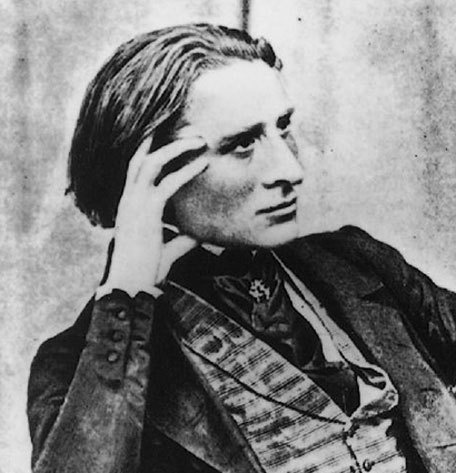
Yesterday I was perusing a slim volume of his more recent poems, one of which--indeed the title poem--is entitled "The Sorrow Gondola"(Sorgengondolen).It's actual a poem about a piece of music,Franz Liszt's "La Lugubre Gondola II". This very bizarre piano piece uses angular melodies and weird harmonies to create a world of mystery and sorrow--its one of Liszt's very late pieces, composed in Venice (where else!). His friend (and son-in-law!) Wagner died shortly afterwards.also in Venice. I was playing the piece at the piano trying to fathom Liszt's odd chord changes, when I remembered that amongst the vast corpus of the music of John Adams, there is a transcription he made for orchestra of this music; I found the CD and listened. It made so mach more sense in the orchestration than as a piano piece, and this thrilled me to rediscover this strange Adamsian opus.
Now I am going to re read the poem as a musical entity, as if it were to travel in time, as if it was a kind of music.
And then I thought--what would Franz Schubert have thought about it as a lieder text?

Sunday, December 18, 2011

Tomas Transtromer


Pictures above:
TT being serenaded at his Nobel lecture; at the piano with one good hand.


Tomas Transtromer has always been my favorite Swedish poet, well maybe neck and neck wih Ekelov, so I was elated to hear he had won the Nobel prize this year. Some naysayers complained that the Swedish Academy, which chooses the Nobel winners, shouldn't have named one of their own country men. But Tomas Transtromer is a universal poet, and his works have been translated widely, into as many as 60 languages.
Music, and its inner meaning for him, is a theme that permeates his poetic output, and he is especially close to Schubert. Sadly, he suffered a stroke several years ago and lost the use of his right arm.He's been a good pianist and now is learning left handed repertory, and it was rumored that for his Nobel lecture he would simply play something of Schubert (a transcription I suppose), but as it turned out various poets read his poetry to him and did so in several languages.
But the moment that I won't forget (I watched this on the Nobel Prize web site) was of a string quintet playing the Schubert C major Quintet right in front of him, only a few feet away. If you know his poem "Schubertiana" you would know what this meant to him.

Here's the first stanza of his poem:

“Schubertiana”
by Tomas Transtr¨omer. (Trans. Kalle R¨ais¨anen)
I.
In the evening-dark of a place outside New York, a look-out point
where one glance can encompass eight million people’s homes.
The giant city over there is a long, flickering snow-drift, a spiral
galaxy on its side.
Inside the galaxy, coffee cups are slid over the counter, store-fronts
beg with passers-by, a crowd of shoes that leave no traces.
The climbing fire-escapes, the elevator doors gliding shut, behind
locked doors a constant swell of voices.
Sunken bodies half-sleep in the subway cars, the rushing catacombs.
I know, also — statistics aside — that right now Schubert is
being played in some room over there and that to someone
those sounds are more important than all those other things.

Wednesday, September 28, 2011

Almglocken

Rambling along on the "canterelle trail" in Sleepy Giant Park the other Day, I found myself besieged by a group of Mahleresque tunes which had invaded my head. I wondered why this would be. Maybe its the sylvan setting? The pastorale? The futility of looking for chanterelles so late in the season (or the irony, which could accord with the Mahler ditties.)

Actually my son had reawakened my affinity with old Gus, as the other day we were driving and he insisted on playing the Symphony No 1, in the car, and l when we got back to the house he put on a record (yes, an LP) of the Sixth, which I must confess is one of my favorites--the slow movement being desert island material. I used to think the Third's slow movement without parallel, but lately I've thought it a bit too indulgent, somewhat over the top in reiterating those achingly longing long lines of desire. (A colleague of mine after a performance of the Third at Woolsey Hall in NH was heard to complain loudly in the lobby about this music's treacly sentimentality--"it's like a bunch of drunks at a high school reunion singing the alma mater over and over again).
Among other things, what kills me in the Sixth is the use of the almglocken (see picture above)
They appear very subtly (in most recordings) and are quite random in rhythm and pitch--Mahler wanted this "aleatoric" texture to conjure up an alpine pastoral setting. (although truth to be told, had a bunch of cows with their clanking bells wandered into the vicinity of one of his alpine composing huts, he'd have had a fit--he demanded silence from Nature when working.)
Another composer who has used cow bells to great affect is John Adams--in his"Naive and Sentimental Music" among others. And having brought Adams and Mahler together here, I ought to mention the book review in last Sunday's NY Times wherein a new biography of Mahler gives John the excuse to write a short essay on his take on the greatest symphonist since Bruckner.

Friday, September 2, 2011

NO POWER!!

BOLETES

NOTE: THIS POST WAS WRITTEN SEVERAL WEEKS AGO. THE HURRICANE SEEMS A DISTANT MEMORY NOW (WE'RE GEARING UP FOR WINTER-- YESTERDAY I BOUGHT A ROOF SNOW RAKE!)


Many have said "you guys were lucky, your power was only off for a few days" Considering that some folks here in CT still don't have it back (five days running) we do indeed feel "lucky."
Sitting in the dark with some candles and a flashlight or two, I thought "this should be a positive experience, like you are at your cabin in the Sierras and have the kerosene lamps going and the wood stove fired up; but no, its not like that at all. There's no romance. You really want "normalcy" to return. I tried reading for a while but couldn't concentrate so I stuck my iPod buds in the ears and ran the composer gamut, coming to a sudden halt at Sibelius, Symphony No. 4.
"Perfect" I thought--so dark and cold. I thought it might be interesting to follow the score, which I had handy, even though the low light made it hard to read; but the basic outlines of the notes was enough--it's long familiar music to me, but I hadn't listened to it in a while.
Back in Sibelius day--the 4th symphony dates from 1910 or so--electricity was not a given, especially in rural areas. Sibelius liked to compose at night (often with the cognac bottle handy) and I've often wondered if his output increased after electricity came to Ainola, when he could have better lighting for his nocturnal labor. But the Fourth is dark music and seems to paint a bleak but subtle music. It is bare bones stuff, shorn of ornament, frill and decoration. Its nick name was the barkbrod" symphony, which refereed to the Scandinavian tradition of mixing ground up birch bark with flour during times of hardship and famine.
The hurricane left a tremendous amount of moisture from the heavy rains and the woods and fields around here have been bursting with fungi.. I found a tremendous "Hen of the Woods" on my neighbor's lawn (tasty but needs long stewing) and a bunch of boletes, porcini like (not really edulis but close).
Identifying Boletus species can be challenging some times. But eating one you are not sure of is not as risky as you might think. There are no "deadly" toxins in the Boletus family, although there are a few that can give you a nasty gastrointestinal experience. If there are red pores (under the cap) and it stains blue wen cut, you are skating on thin ice.The "bad" ones taste bitter and the edible ones taste good, although many are mediocre.
So the rule is, about Boletes, if it tastes good, eat it! The same cannot be said for other mushrooms, especially the deadly Amanitas which, apparently taste pretty good

Monday, August 15, 2011

Bruckner on the Beach


After my ramble a few weeks ago over Bruckner as a montane composer I thought it might be interesting to size him up as an oceanic composer, especially as we went to Cape Cod last week and spent a good deal of time contemplating the mighty surf of the Wellfleet beaches. One day the sea wsa very rough and the waves were gigantic--no one , not even the most intrepid surfers, ventured into the water. Walking along the shore I found the scherzi of some of the symphonies quite well matched, but it was on another day, when the rolling breakers had more regular and rhythmic movement, that I found the Adagio of the 7th Symphony most compelling.

I wondered how old Anton would have liked walking along at the waters edge, barefoot, hearing his mighty creation in his ear buds--wait, that wouldn't have happened! Among his many eccentricities was an obsession with counting and apparently, given a beach, he was fond of counting grains of sand. I suppose it was sort of a meditation. I don't think he'd have made much progress.

The Brucknerian gradual build-up of minor climaxes that finally accumulate in something big and smashing, is certainly analogous to the way waves come in to shore. But in essence, I think Bruckner is more at home in the mountains than in the maritime environment.

Of course the ocean has its own sounds and doesn't need any sound track added to it, yet...there's a great temptation. I think the Brucknerian ocean analogue has to do with the peaks and valleys of the waves, those crests and troughs which are reflected in Bruckner's wonderful analogues of light and dark, loud (really loud!) and soft. His climaxes do so often work up to a glorious "breaking" just like a wave's behaviour.
Today, walking in the East Rock woods, there were so many boletes about that I made little progress, stopping so often to check then out and admire them (the red and yellow "Boletus bi-color" was particularly vivid and tasty too)---like Bruckner counting his grains of sand.

Monday, July 18, 2011

Brucknerian mountains


Sunday afternoon, a hot sweltering day in the City, I sat in the vast expanses of Lincoln Center's Fisher Hall, and I couldn't imagine being in a place more different from where I had been the week before-on the shore of an alpine lake at the base of the Sierra Buttes in the Sierra Nevada
Yet the glacial ebbs and flows, the undulating valleys and peaks of Bruckner's 9th Symphony transformed the hall (in my mind anyhow) into a very montane environment.
Literalists, or objectivists, would downplay the affective power of a Bruckner symphony, pointing out, in contrast, its purely"musical" (ie, "formal") attributes. Maybe it was because I had so recently been in such an environment that my sensors picked up the connection between musical structure, meaning, memory and mountains.
Yes, there are Brucknerian mountains, and they are not all in Austria
And indeed there are Mahlerian mountains, and even Beethovenian mountains (pace LB whose famous essay "Bullsession in the Rockies" from the late fifties warned us from such "meaningful" allusions - and no, there are no "Buxtehudian "mountains.}
Although I don't think Bruckner was much of an "Alpinist"--ie, a mountain climber/hiker--his music has its wildly contrasting peaks and troughs; in fact whole series of climaxes of varying intensities is a perfect way of "reading" a mountain range or massif such as the Buttes.
This begs the question: can we "read" Nature as we do Art? Or do we need to?

Sunday, July 10, 2011

Wholefoods myco harvest

I was extremely optimistic about a late Spring visit to my cabin in the northern Sierras --actually, by the calendar, it was an early summer visit--as the late melting snow from the record breaking winter accumulation promised a bumper crop of morels and possibly boletes. Normally the prime season is the first few weeks in June, the last vestiges of snow having faded by then. But I guess the message didn't get through to the asco's mycelia that it was ok to come out now. Despite several serious sweeps of known areas of fruiting, the forest floor yielded NOTHING! I did, however, find a cluster of boletes growing in a disturbed area that had yielded the tasty mushrooms in the past.But wouldn't you know it-- they were just over the hill, worm ridden to the max.
Actually, there was one good specimen that we were able to eat after carving away the "bad" spots (In fact, I doubt ingesting the small larvae would do any harm)
Upon our return to the lowlands (Berkeley) we were delighted to find in the kitchen for dinner that night a handsome and generous collection of not only boletes but a few morels to boot! All this harvested in the produce aisle of the local Wholefoods by prescient Debby who must have heard of our misadventures. (Actually, the lack of fungi aside, we had a great week in the Sierra Nevada)
My cabin lies not far from the majestic crags called the Sierra Buttes, which are always awe inspiring in any season, but the late Spring's heavy mantle of snow gave them an even grander disposition; I never tire of feasting my eyes upon them, but this year they were positively Brucknerian.